Energy use is one of the largest controllable costs in a school district’s operating budget. How a district manages that cost has consequences not just for the bottom line, but for the quality of the learning environment and the long-term sustainability of school facilities. Schools that invest in energy-efficient building systems, equipment, and operations, including high-performance HVAC systems, LED lighting, building envelope improvements, and energy management systems, can achieve significant reductions in utility costs, freeing up resources that can be redirected toward educational programs, staffing, and facility maintenance.
But energy efficiency is not only a fiscal strategy: the systems that govern how a building is heated, cooled, ventilated, and lit are the same systems that determine whether classrooms are comfortable, whether air quality supports student health and concentration, and whether the physical environment enables or undermines teaching and learning. Poor energy performance and poor indoor environmental quality are frequently symptoms of the same underlying problems: aging or inadequate HVAC systems, leaky building envelopes, and deferred maintenance. This means that energy upgrades are among the highest-value investments a district can make for both cost and occupant wellbeing.
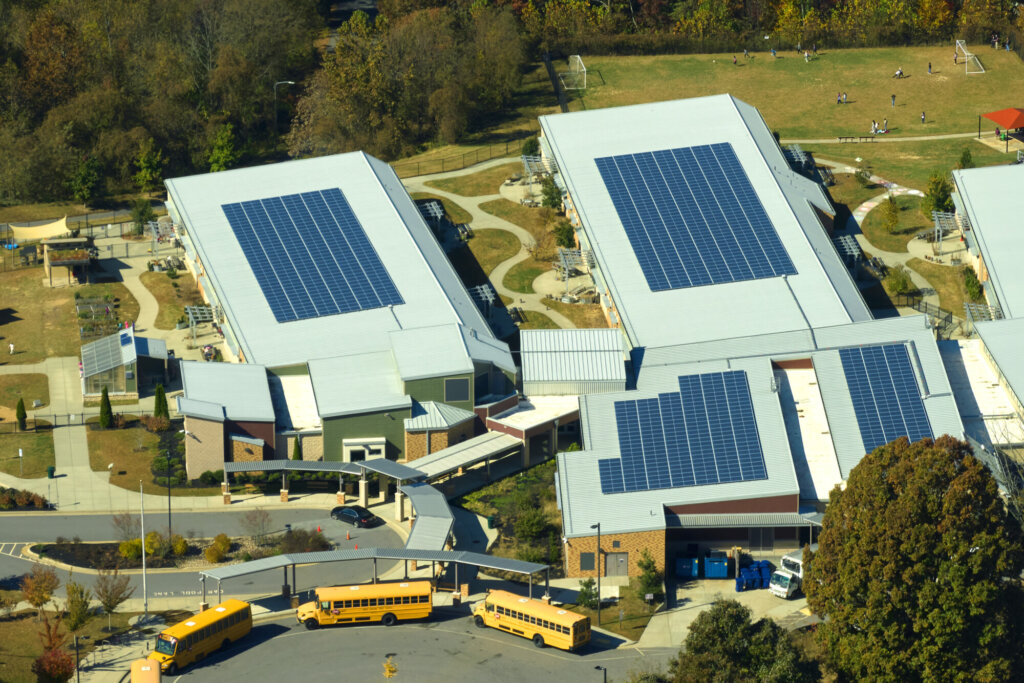
Increasingly, districts are also situating energy decisions within a broader sustainability frame, pursuing electrification, on-site renewable energy generation such as solar, and net-zero energy goals that align school facilities with community and state climate commitments. Financing mechanisms such as performance contracting, energy savings agreements, and utility rebate programs have made these investments more accessible to districts with limited upfront capital. Approaching energy use strategically through energy audits, utility benchmarking, lifecycle cost analysis, and long-range capital planning transforms what has often been treated as a fixed operational expense into an active lever for fiscal health, environmental responsibility, and better schools.