

In this toolkit, you’ll find resources to help cities, school districts and partners work together to envision and implement districtwide, equity-based, open-access green schoolyards.
School Grounds
Thoughtfully designed school grounds can support educational and health outcomes
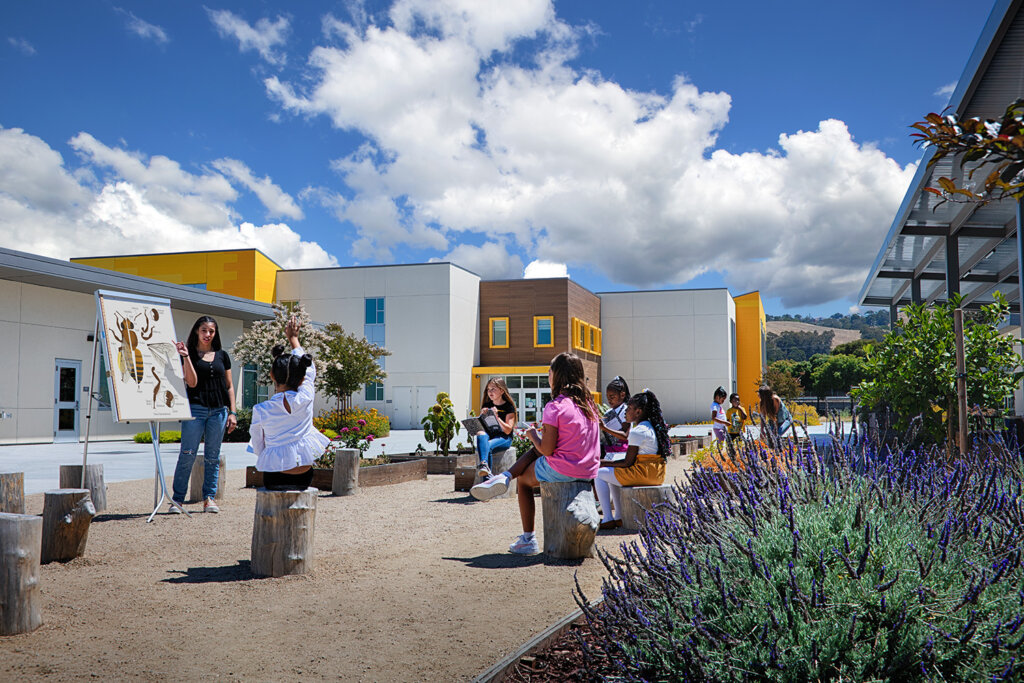
Beyond the building: School grounds and outdoor spaces
When thoughtfully designed, school grounds have the potential to become a vital extension of the learning environment, supporting student health, deepening educational experience, and strengthening ties between schools and the communities they serve.
School grounds can function as outdoor classrooms: gardens, outdoor science labs, natural play areas, and environmental installations offer hands-on learning opportunities that reinforce curriculum, build environmental literacy, and connect students to the natural world. Well-designed outdoor spaces also support physical activity, reduce stress, and provide opportunities for the kind of unstructured social interaction that contributes to student wellbeing in ways that indoor environments cannot fully replicate.
Green schoolyards that feature sustainable landscaping and design, including native plantings, permeable surfaces, shade structures, and stormwater management features, contribute to climate resilience and energy efficiency while modeling environmental stewardship for students and communities. Accessible and inclusive outdoor spaces ensure that all students, including those with disabilities, can participate fully in the benefits that well-designed grounds provide. And school grounds that are attractive, safe, and welcoming strengthen the relationship between schools and the neighborhoods they serve, creating spaces where families and community members feel invited.
Treating school grounds as an integral part of facility planning, rather than an afterthought to building construction and renovation, is an investment in the full range of outcomes that school facilities are meant to support.
Related topics
Related resources
Explore resources available in the NCSI library.
-
-
This interactive gallery includes dozens of photos from green schoolyards in the U.S. and Canada, highlighting design features that can improve the sustainability, functionality and appeal of green school grounds.
-
The national Schoolyard Forest System®’s online Resource Library is a collection of free, practical tools and resources designed to support schools and school districts as they plan, develop, use, and manage schoolyard forests.
-
Resource Hub
Children and Nature Network Resource Library: Greening Schoolyards and Learning Outside
Children and Nature Network
This resource hub from the Children and Nature Network hosts an array of toolkits, guides, case studies, and research that can help school leaders identify pathways for designing, funding, and implementing green schoolyards and outdoor learning environments.
-
This toolkit provides detailed strategies for developing, implementing, and maintaining school garden programs within an urban educational context.
Suggest Resources
Do you have a suggestion for a resource that should be included in our library?
Recent news
-
Georgia
Georgia School Garden Connects Students With Agriculture Opens link in new tab
RFDTV – July 7, 2026
A Georgia school garden is helping students connect with agriculture through hands-on learning. Known as the 4-H Farm and School Garden, the project was created to get students outside while teaching them where their food comes from. Organizers say the lessons are extending beyond the classroom, with students encouraging their families to try new vegetables…
-
New York
What Happens When Kids Design Playgrounds? Lava, Mushrooms, Giant Chess. Opens link in new tab
New York Times – June 27, 2026
Thousands of New York City students have helped remake their drab asphalt schoolyards into vibrant, green spaces that they actually want to play in over the summer. The students acted as junior landscape architects. Through a hands-on design process, they made up wish lists — with wants like a swimming pool, chocolate fountain, merry-go-round and…
-
National
Beyond Recess: Why Outdoor Learning Shouldn’t Wait Anymore Opens link in new tab
Smart Brief – June 16, 2026
Time outside in school has been treated as a pause button: recess, a break from instruction, a chance for students to move their bodies before heading back indoors to “real learning.” That mindset no longer fits what we understand about how attention works, how children develop or what our students are carrying into classrooms every…