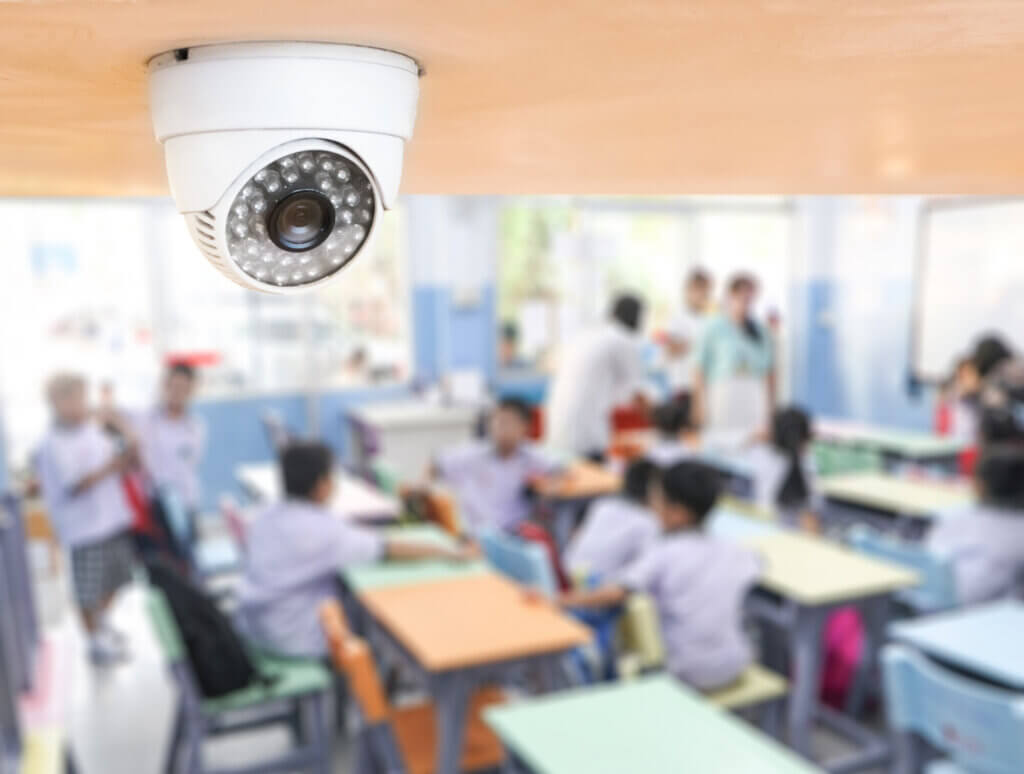
Keeping students and staff safe is among the most fundamental responsibilities a school district holds, and the condition, design, and configuration of school facilities play an important role in how well that responsibility is met. Effective school safety draws on a layered set of physical, behavioral, and cultural measures: secure building envelopes, controlled access to classrooms and common areas, reliable communication systems, behavioral threat assessment processes, clear and simple emergency protocols, and a shared safety culture that extends across the entire school community.
The physical environment both supports and intersects with each of these elements: the layout and design of a school building can itself support or complicate safety, as campuses with clear sightlines, legible circulation, access control, video surveillance infrastructure, and well-maintained spaces are generally easier to secure and monitor than those with deteriorating infrastructure or poorly controlled perimeters. At the same time, how a building feels to the people inside it matters enormously. Security measures that are overly visible or restrictive can, if not thoughtfully implemented, create environments that feel more institutional than welcoming, with potential consequences for the sense of belonging and trust that supports student wellbeing and engagement.
Research and practice have increasingly converged around the idea that security and the educational environment are not competing priorities but complementary ones, with the goal of creating spaces that are genuinely safe and that feel like supportive, welcoming places for learning. Integrating security considerations into the design and planning process from the outset, rather than retrofitting measures after the fact, tends to produce outcomes that are both more effective and less disruptive to the daily life of a school. Ultimately, school safety is most durable when it is understood as a shared responsibility that encompasses physical design, operational systems, and the relationships and culture of the whole school community.