VRF in Schools Roundtable
HVAC Change Lab
Join this roundtable discussion, hosted by the HVAC Change Lab, to share lessons learned on the design, installation, controls, operations, and maintenance of variable refrigerant flow (VRF) HVAC systems.



HVAC Change Lab
Join this roundtable discussion, hosted by the HVAC Change Lab, to share lessons learned on the design, installation, controls, operations, and maintenance of variable refrigerant flow (VRF) HVAC systems.
The HVAC Change Lab is a collaborative initiative designed to address the root causes of the challenges that schools face in upgrading heating, ventilation, and air conditioning (HVAC) systems. Led by the Center for Green Schools at the U.S. Green Building Council, the New Buildings Institute (NBI), and the National Center on School Infrastructure (NCSI), and supported by an array of partners, the Change Lab acts as a centralized support network for under-resourced school districts, aiming to bridge gaps in staff capacity, knowledge, and funding so that HVAC upgrade projects don’t stall or fail.
Change Lab actions include:
Read “Early Findings from the HVAC Change Lab” to learn about what we’ve heard from districts participating in the Change Lab, and what it means for what the Change Lab is developing.
Guide/Tool
Center for Green Schools, National Center on School Infrastructure (NCSI), New Buildings Institute
Watch this webinar, co-hosted by the Center for Green Schools at USGBC, New Buildings Institute (NBI), and NCSI, to learn about the HVAC Change Lab, an initiative designed to help school districts modernize their heating, cooling and air conditioning (HVAC) systems, and in turn improve energy efficiency along with learning and health outcomes.
The 36,000 U.S. public schools with aging and substandard heating, ventilation, and air conditioning (HVAC) systems are facing a crisis. Many rely on systems that fail to regulate temperature, filter out air pollutants, or provide adequate fresh air in classrooms; some lack air conditioning entirely. At the same time, more frequent extreme weather and wildfire smoke events are placing additional stress on outdated HVAC systems, increasing the risk of unsafe indoor air conditions and school disruptions. This results in poor student health and educational performance, strain on staff, and limited capacity to support community needs during extreme weather events.
Modern, efficient HVAC systems provide immediate and long-term benefits for school districts. They improve indoor environmental quality by delivering cleaner air, consistent ventilation, and comfortable temperatures, thereby reducing illness and creating environments where students can learn and thrive. They also reduce energy and maintenance costs and increase the resilience and lifespan of school facilities. An investment in HVAC modernization is thus an investment in student and staff well-being, attendance, and achievement, while also helping schools operate efficiently and reliably.
Proven technologies and design approaches create opportunities for districts to align infrastructure investments with health, sustainability, and financial goals. The HVAC Change Lab helps school districts seize these opportunities by connecting them with peer learning opportunities, technical expertise, and practical resources. By building capacity and streamlining access to guidance and funding pathways, the HVAC Change Lab is empowering district leaders to confidently plan and implement HVAC upgrades that benefit students, staff, and communities.
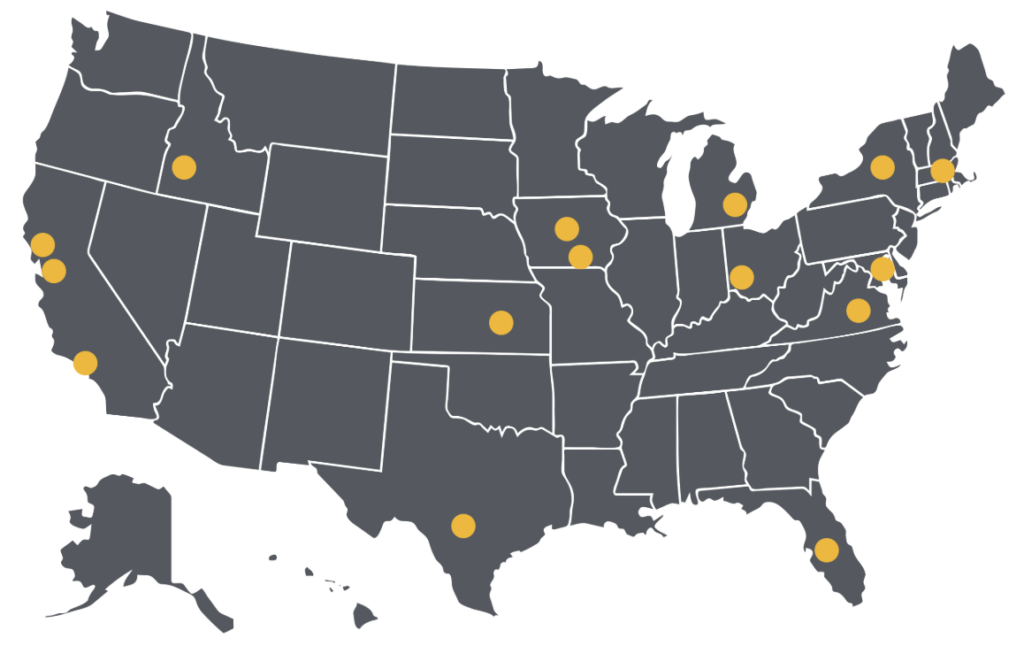
Join the HVAC Change Lab network to receive program updates and communications. You can also sign up for the National Center on School Infrastructure (NCSI) newsletter, which offers monthly updates on school facilities resources, events, news, and more.
View past issues of our newsletter and sign up above to receive future issues in your inbox.
Explore a growing suite of HVAC resources
Research/Report
Lucy C. Sorensen, Moontae Hwang, Marzuka Ahmad Radia
This study demonstrates that a school’s HVAC system over time reduces student absences, decreases student suspensions, and modestly increases student math and reading scores.
This report provides K-12 leaders a roadmap and decision-making tools to electrify their school buildings.
Guide/Tool
ASHRAE
This ASHRAE guide ranks ventilation and filtration upgrades—MERV 13 filters, 4–6 air-changes, HEPA units, UV-C—into Very High, High and Medium priorities for K-12 facilities. Each measure lists IAQ benefit, cost and energy impact, giving engineers and administrators a practical, phased playbook.
These concise, easy-to-understand resources are designed to help school staff and decision-makers without a technical background make informed choices about indoor air quality.
Research/Report
Center for Climate Integrity (CCI)
This report estimates the enormous and rising cost of keeping U.S. public school classrooms cool as climate change leads to more extreme heat during the school year. It finds that over $40 billion will be needed by 2025 just to install or upgrade air conditioning in more than 13,700 schools.
Do you have a suggestion for an HVAC resource to include in our library?