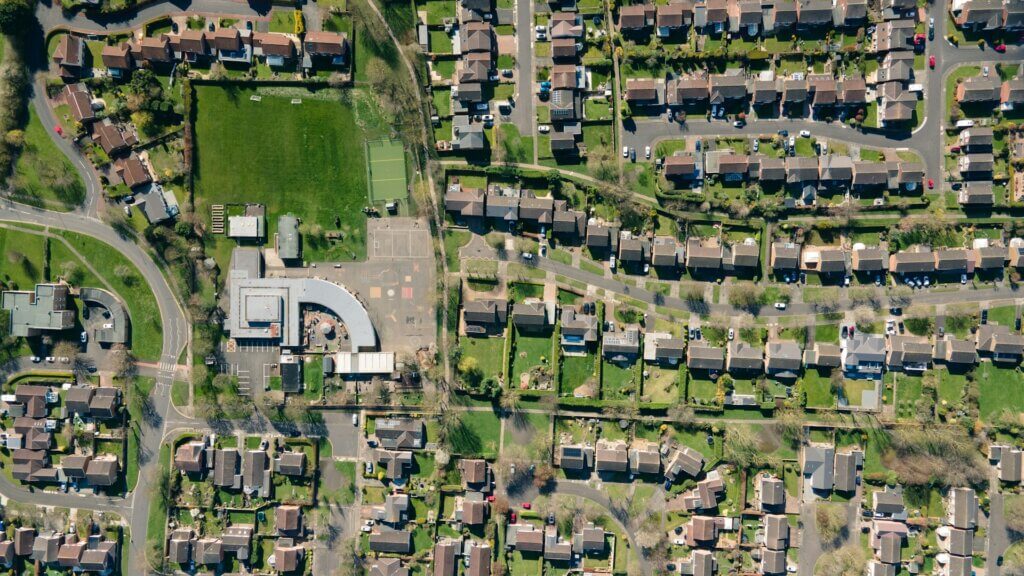
Where a school is located shapes nearly everything about how it functions: who can reach it, how safely, at what cost, and with what consequences for the surrounding neighborhood. Siting decisions determine how students get to school and how long it takes; a well-sited campus supports walkability, reduces transportation costs, and minimizes traffic impacts on surrounding streets, while a poorly sited one can create access barriers that fall hardest on families without reliable transportation. Proximity to environmental hazards, including busy roads, industrial facilities, contaminated land, or flood-prone areas, poses direct risks to student and staff health. The physical characteristics of a site matter too: size, topography, soil conditions, and access to utilities all influence what can be built, how much it will cost to build and operate, and whether the campus can accommodate outdoor learning, physical activity, and future growth.
Site selection challenges vary significantly by context: in urban areas, the scarcity and cost of available land can force difficult tradeoffs between ideal location and what is actually feasible; in suburban communities, rapid growth and shifting development patterns can make it difficult to anticipate where students will live; and in rural areas, long travel distances and limited site options can constrain both access and program offerings. Because school buildings are long-lived assets, often serving communities for 50 to 100 years, siting decisions made today carry consequences that extend far beyond the immediate planning horizon, making careful, data-informed site selection one of the highest-leverage decisions in the facility planning process. Approaching siting with the same rigor and community engagement applied to building design and capital planning is essential to ensuring that new and relocated schools serve the students and communities they are meant to support.